
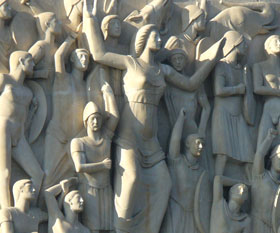
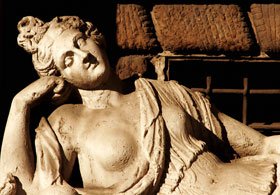
Rome contains a vast and impressive collection of art, sculpture, fountains. mosaics, frescos, and paintings, from all different periods. Rome first became a major artistic centre during ancient Rome. Metal-work, coin die and gem engraving, ivory carvings, figurine glass, pottery, and book illustrations are considered to be ‘minor’ forms of Roman artwork. Rome later became a major centre of Renaissance art, since the popes spent vast sums of money for the constructions of grandiose basilicas, palaces, piazzas and public buildings in general. Rome became one of Europe’s major centres of Renaissance artwork, second only to Florence, and able to compare to other major cities and cultural centres, such as Paris and Venice. The city was affected greatly by the baroque, and Rome became the home of numerous artists and architects. In the late 18th century and early 19th century, the city was one of the centres of the Grand Tour, when wealthy, young English and other European aristocrats visited the city to learn about ancient Roman culture, art, philosophy and architecture. Rome hosted a great number of neoclassical and rococo artists, such as Pannini and Bernardo Bellotto. Today, the city is a major artistic centre, with numerous art institutes and museums.
Rome has a growing stock of contemporary and modern art and architecture. The National Gallery of Modern Art has works by Balla, Morandi, Pirandello, Carrà, De Chirico, De Pisis, Guttuso, Fontana, Burri, Mastroianni, Turcato, Kandisky, Cézanne on permanent exhibition. 2010 sees the opening of Rome’s newest arts foundation, a contemporary art and architecture gallery designed by acclaimed Iraqi architect Zaha Hadid.
abc