Location
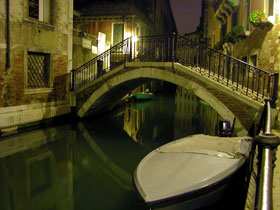
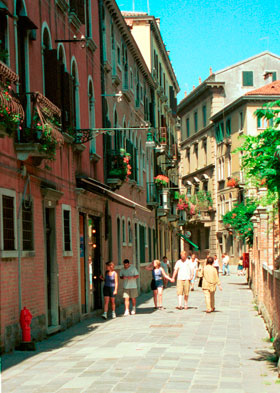
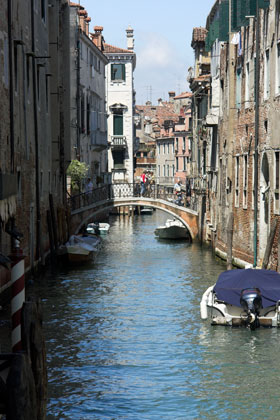
Venice is a city innortheast Italy sited on a group of 118 small islands separated by canals and linked by bridges. It is located in the marshy Venetian Lagoon which stretches along the shoreline between the mouths of the Po and the Piave Rivers. Venice is renowned for the beauty of its setting, its architecture and its artworks. The city in its entirety is listed as a World Heritage Site, along with its lagoon.
The historical city is divided into six areas or “sestiere” (while the whole comune (municipality) is divided into 6 boroughs which one is composed by all 6 sestiere). These are Cannaregio, San Polo, Dorsoduro (including the Giudecca and Isola Sacca Fisola), Santa Croce, San Marco (including San Giorgio Maggiore) and Castello (including San Pietro di Castello and Sant’Elena). Each sestiere was administered by a procurator and his staff. Nowadays each sestiere is a statistic and historical area without any degree of autonomy.
These districts consist of parishes – initially seventy in 1033, but reduced under Napoleon and now numbering just thirty-eight. These parishes predate the sestieri, which were created in about 1170.
Other islands of the Venetian Lagoon do not form part of any of the sestieri, having historically enjoyed a considerable degree of autonomy.
Each sestiere has its own house numbering system. Each house has a unique number in the district, from one to several thousand, generally numbered from one corner of the area to another, but not usually in a readily understandable manner.
Climate
Venice has a humid subtropical climate with cool winters and very warm summers. The 24-hour average in January is 2.5 °C (36.5 °F), and for July this figure is 22.7 °C (72.9 °F). Precipitation is spread relatively evenly throughout the year, and averages 801 millimetres (31.5 in).
Cuisine
Venetian cuisine is characterized by seafood, but also includes garden products from the islands of the lagoon, rice from the mainland, game, and polenta. Venice combines local traditions with influences that are distant from millennial business contacts. These include sarde in saor, sardines marinated in order to preserve them for long voyages; risi e bisi, rice, peas and ham; fegato alla veneziana, Venetian-style liver; risotto with cuttlefish, blackened from the ink; cicchetti, refined and delicious tidbits (akin to tapas); antipasti, appetizers; and prosecco, an effervescent, mildly sweet wine.
Venice is also famous for bisàto (marinated eel), for the golden, oval-shaped cookies called baicoli, and for different types of sweets such as: pan del pescatore (bread of the fisherman); cookies with almonds and pistachio nuts; cookies with fried Venetian cream or the bussolai (butter biscuits and shortbread made in the shape of an “S” or ring); the crostoli; the fregolotta (a crumbly cake with almonds); milk pudding called rosada; and cookies of yellow semolina called zaléti.